

Key Takeaways
- Temperature-controlled logistics (TCL), also called cold chain logistics, is the specialised management of storing, preserving, and transporting goods that require specific temperature ranges throughout the supply chain.
- The cold chain must remain unbroken from production through storage, refrigerated transport, and final delivery to maintain product integrity.
- Common products requiring temperature-controlled logistics services include pharmaceuticals, vaccines, frozen foods, dairy, seafood, and biologics.
- Standard temperature ranges include: frozen (-18°C to 0°C), refrigerated/chilled (2°C to 8°C), controlled room temperature (15°C to 25°C), and ultra-cold (below -60°C).
- Temperature-controlled logistics solutions are critical for food security, public health, pharmaceutical efficacy, and regulatory compliance.
Food waste is one of the many costs of inadequate temperature-controlled logistics infrastructures globally.
According to a UNEP-FAO report on Sustainable Food Cold Chains, inadequate cold chain infrastructure contributes to the loss of 526 million tonnes of food annually — equivalent to 12% of global production — costing the global economy $936 billion each year.
For many perishable food products, temperature-controlled logistics is mission-critical. It is vital to improve food security, ensure economic prosperity, limit carbon emissions and sustain public health.
As global supply chains expand, temperature-controlled logistics solutions have become essential for businesses transporting sensitive goods across borders and climates.
What are temperature-controlled logistics?
Temperature controlled logistics (TCL) is a branch of logistics that focuses on the storage, preservation and shipment of goods that require maintenance at specific temperatures and are sensitive to atmospheric conditions. It encompasses the end-to-end management of perishable goods logistics — from production and packaging through refrigerated transport and final delivery.
These goods are typically meats, seafoods, vegetables, cosmetics, and pharmaceuticals.
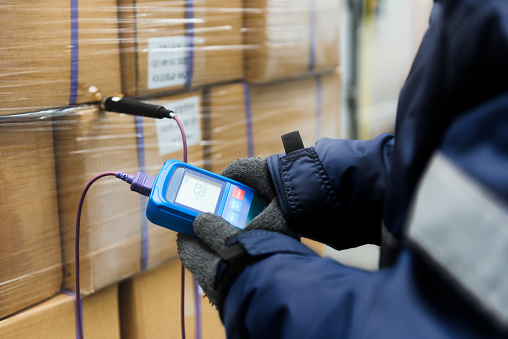
It is also referred to as cold chain logistics.
TCL primarily mainly revolves around carefully handling such products within a low-temperature environment while maintaining an unbroken ‘cold chain’ at all stages of the transportation cycle.
For example, collection, packaging, processing, storage, cold storage warehousing, and chilled distribution.
What is a temperature-controlled supply chain?
A temperature-controlled supply chain constitutes a series of refrigerated facilities and refrigerated transport systems designed to sustain consistent optimal conditions for perishable goods within a given temperature range. This includes real-time temperature monitoring throughout every touchpoint to ensure cold chain integrity.
Temperature-controlled cargo
The most common products that require temperature-controlled logistics services include:
- Fruits and vegetables
- Frozen food like ice cream
- Meats (fresh and frozen)
- Seafood
- Dairy products
- Flowers and floriculture products
- Beverages (wines, spirits, craft beers)
- Chemical products
- Pharmaceutical cold chain products (vaccines, biologics, insulin)
- Clinical trial logistics materials
- High-value electronics or artwork.
Why is temperature-controlled logistics important?
The majority of perishable products require a constant cold temperature to stay fit for human consumption and maintain their efficacy.
For example, pharmaceuticals, particularly, medicines can become chemically unstable when exposed to very hot or cold environments.
Such environments can negatively alter the chemical properties of drugs and trigger adverse side effects, yet most drugs are vital for public health. These risks are further exacerbated with specific pharmaceuticals, like vaccines, antibiotics, biologics, and blood products.
And as drug development advances in complexity, so does the need for accurate temperature standardisation during temperature-controlled transportation logistics to ensure efficacy and Good Distribution Practice (GDP) compliance.
Due to such dire implications for public health and safety, temperature-controlled logistics solutions are typically stringently monitored by national regulators and require comprehensive cold chain validation.

Additionally, manufacturers of products like seafood, dairy products, and frozen meat, understand the importance of sustaining products at a set temperature for the duration of the sales cycle to maintain cold chain integrity.
While some perishable products can survive temperature fluctuations, others become unsafe with even the slightest temperature deviation — known as a temperature excursion.
Farmers and manufacturers know that such deviations can put their customers at risk of food poisoning or foodborne illness.
Furthermore, without temperature-controlled logistics services, the trade of agricultural products would take place within limited geographic areas.
However, TCL and modern cold chain management infrastructures allow farmers to sell their produce much farther afield and across continents, thus contributing to income stabilisation for agriculturally dependent households worldwide.
Pharmaceutical temperature-controlled transportation
As of 2026, there has been a rise in the need for temperature-sensitive biopharmaceuticals transportation, mainly due to the advent of the COVID-19 pandemic and the growth of biologics and gene therapies.
Pharmaceutical cold chain transportation focuses on logistical activities that ensure the safe transportation of medicinal products. This means adhering to high-level regulatory GDP compliance requirements and security measures to prevent medicine adulteration and theft.
These activities mainly revolve around delivery-date management and optimal temperature control using temperature data loggers and IoT cold chain sensors, as both the patient’s life and the pharma company’s reputation could be at stake.
Generally, while the cost of pharmaceutical temperature-controlled logistics is relatively low compared to product value, many things can go wrong in the cold chain supply without proper cold chain visibility and temperature excursion management.
Industry analysis by IQVIA indicates that up to 20% of temperature-sensitive pharmaceutical products are damaged or degraded during transit due to poor cold chain management — underscoring the critical need for robust temperature-controlled logistics solutions.
Hence, transporting pharmaceuticals across the globe can be a high-risk operation requiring robust temperature-controlled logistics solutions.
However, these risks can be mitigated by choosing the right partner for the temperature-controlled transportation of sensitive pharmaceuticals — one with proven cold chain compliance and real-time temperature monitoring capabilities.
How does cold chain logistics work: Factors to consider
Despite many unfounded assumptions, cold chain management doesn’t begin with transportation. Temperature-sensitive products require a consistent, specific temperature range throughout their entire lifecycle — this is known as end-to-end cold chain management.
A significant rise or fall in temperature during any part of the supply chain can spell disaster for the goods. Furthermore, a broken temperature chain can, in turn, negatively impact the end-user, especially with products that are ingested by humans.
This means that temperature-controlled logistics should keep the temperature of goods constant throughout all phases. It starts from thermal packaging, and carefully choosing transportation routes, to timing and cold chain visibility of the goods, till the customer finally receives the goods via last-mile cold chain delivery.
To achieve optimal cold chain integrity, some specific cold chain factors have to be considered depending on the industry. For example:
- Temperature margin for error
- The product’s temperature and humidity range
- Acceptable risk levels
- Risks to a product’s integrity
- Availability of backup temperature controls
- How temperature is controlled
- Airflow and its impact on temperature
- Temperature logging and data tracking
Types of temperature controlled logistics
Refrigerated vehicles
This temperature-controlled transportation logistics category relates to traditional vehicles that are installed with thermostatically controlled cargo compartments to enable required temperature ranges to be maintained throughout transit.
Such refrigerated transport vehicles are typically small vans and trucks equipped with electronic control systems to maintain optimal temperatures for goods.
While some smaller vehicles rely on their engines to power their refrigeration units, most large vehicles possess independently powered units and electrical backup systems ensure uninterrupted cold chain integrity.
To safely transport temperature-sensitive goods, these vehicles are typically constructed with a host of unique features.
For example, dual-evaporators to maintain precise chilled temperatures, temperature data loggers and temperature monitoring equipment to keep consistent record-keeping logs, and remote temperature monitoring and GPS temperature tracking capabilities, as well as IoT cold chain sensors for real-time alerts.
Active shipping system
Active shipping systems are mainly employed in temperature-controlled air freight logistics and sea freight shipping. These are powered primarily by internal batteries or via an external electricity source, and thus are well-suited to long-term shipments and international refrigerated transport.
Active systems provide precise temperature control and are essential for pharmaceutical cold chain requirements where strict GDP compliance is mandatory.
Passive shipping system
Passive shipping systems require no human or external input as they possess the ability to maintain consistent temperatures over a set period of time using thermal packaging solutions.
These systems utilise insulated shipping containers, phase change materials (PCMs), dry ice shipping, or gel packs to maintain temperature without active refrigeration.
However, after this set period of time, they expire. Such systems are better suited to short journeys and time-critical cold chain shipments to minimise temperature fluctuations or errors.
Also read our article on “Offshore reefer container temperature range”
Airfreight vs Sea freight temperature-controlled logistics
Some years back, sea freight wasn’t considered a viable option for products with a very short shelf life and those that need temperature-controlled transportation logistics. Temperature-controlled airfreight logistics was a preferable option since, in case of delays, air cargo planes can be rerouted within a day or hours.
Delivering temperature-sensitive pharma products via air and express cold chain shipping also carries a significantly lower risk for most of the new biopharmaceuticals and gene therapies. Especially in emergency scenarios, as was witnessed during the COVID-19 vaccine surge, when instances of vaccine expiration were an overarching threat requiring ultra-cold chain capabilities.
However, the costs associated with temperature-controlled air freight logistics are substantially larger than those of ocean freight. This means that the overall cost of a single product may be multiplied many times, which may not be an acceptable change for end-users or economically viable for large-volume shipments.
With the advancement of technology and the development of high-end offshore reefer containers, safe transport of temperature-sensitive products is now possible through sea freight with proper cold chain management systems.
New age products enhanced by Thermo King technology, like our ICEWAVE 8ft Offshore Reefer Container (2.5m) and ICESTORM 10ft Offshore Reefer Container (3m), include microprocessor controllers and enormous processing power to accurately control the refrigeration cycle, ensuring cold chain integrity across oceanic routes.
What are the main processes involved?
Maintaining sensitive goods at appropriate temperatures is a highly sophisticated process that involves multiple cold chain management challenges and uncertainties.
For example, poor thermal packaging, product quality problems, lack of proper documentation, temperature excursions, and even shipping delays.
In addition, companies must devise ways of keeping costs down, and adequately handle capacity and different resource limitations during temperature-controlled logistics processes.
Let’s look at some of the main processes involved in the temperature-controlled logistics supply chain, shall we?
Transporting to the shipper’s location
Passive cooling systems and refrigerated vehicles should be used to transport temperature-sensitive goods like drugs to ensure that they won’t be compromised en route.
Once the goods reach the shipper’s storage facilities, there should be a seamless transition with the right equipment to ensure the safety of the goods like medicines.
This is because it is important to minimise the amount of time the medicines spend at ambient temperatures, especially in warmer climates where temperature excursions occur rapidly.
For example, walk-in cold storage facilities or dry ice shipping solutions can be employed to help maintain the temperature within active and passive containers.
At the warehouse
While shipping to a location necessitates temperature-controlled transportation logistics features, the warehouse where the product is stored before transportation should also boast similar cold storage warehousing facilities.
For temperature-sensitive goods, even a minute of fluctuation can cause significant damage to product integrity.
Not to mention, a power outage, changes in humidity, or even overloading of the vehicle can further exacerbate the issues. To address this, ensure the warehouse facility maintains an alarm with temperature data logs to help you figure out the uncertainties as and when they occur. Real-time temperature monitoring and IoT cold chain sensors provide immediate alerts for any deviations.
Physical loading
Another process that requires careful consideration is ramp handling, and physical loading activities as potential delays can occur due to the nature of the cargo.
Since an electrical connection to power is required during these activities, ensure that all touchpoints have a compatible connection. Additionally, they should have the ability to output appropriate wattage to maintain the required temperature. This is essential for maintaining cold chain visibility during vulnerable transition points.
In transit
Once the goods are on the shipping vessel, the temperature controls should already be taken care of. However, the positioning of the cold storage unit is as important. For example, it is important to avoid storing medicines near cargo doors or other cargo that might affect temperatures in general.
This is because adequate circulation is necessary to reach a stabilised temperature throughout the refrigerated transport container.
Additionally, it is imperative to ensure cooling instruments remain active for the duration of the transit. Sometimes energy-saving modes can be turned on without notice, and the cooling apparatus switched off during rest periods — compromising cold chain integrity.
In conclusion, when selecting appropriate cold storage systems across the cold chain supply, always consider and pay attention to:
- Temperature controls and backup temperature control systems
- Back up temperature controls
- The temperature range and volume of the goods, and capacity requirements
- The layout of the storage unit and airflow optimisation
- Temperature logging and data tracking capabilities via temperature data loggers
- Real-time temperature monitoring and alert systems
- Cargo placement (avoiding areas where temperature variation is likely to happen, like near bay doors)
- Last-mile cold chain delivery requirements and handoff protocols
Optimum temperatures for different products
As we have reiterated throughout this article, temperature-controlled logistics solutions impact every stage of a temperature-sensitive good’s cycle.
From its industry or farm production, storage and packaging, refrigerated transport to the warehouse, and storage at the client’s facility.
However, disparate temperature-sensitive products have different temperature requirements. Understanding these ranges is fundamental to cold chain management. For example:
|
Product Category |
Temperature Range (Celsius) |
Temperature Range (Fahrenheit) |
|
Ultra-cold/Cryogenic (mRNA vaccines, certain biologics) |
Below -60°C |
Below -76°F |
|
Deep frozen meat and seafood |
-30°C to -18°C |
-22°F to -0.4°F |
|
Frozen meat and seafood |
-18°C to 0°C |
-0.4°F to 32°F |
|
Pharmaceutical medicines (vaccines, biologics, insulin) |
2°C to 8°C |
36°F to 46°F |
|
Chill fruits, vegetables, and dairy products |
7°C to 14°C |
44.6°F to 57.2°F |
|
Controlled Room Temperature/CRT (certain pharmaceuticals) |
15°C to 25°C |
59°F to 77°F |
|
Ambient fresh produce |
14°C to 24°C |
57.2°F to 75.2°F |
Challenges with cold chain logistics
Cold supply chain shippers face increasing pressure to ensure temperature-sensitive goods are kept at optimal temperatures through proper cold chain management. However, this constant challenge only gets more sophisticated with every passing year.
The different challenges range from increases in temperature sensitivity, quality standards, and volumes of goods, to continually mounting and dynamic regulations and regulatory cold chain requirements, including GDP compliance.
It is becoming more complicated to service the global market, drive down costs, become more strategic, and address capacity and resource constraints – all while managing customers’ dynamic demands for their temperature-sensitive cargo and maintaining end-to-end cold chain visibility.
Furthermore, as everyday consumers get more informed about their health and sustainability, the demand for fresher foods and products raises another logistical challenge.
As suppliers of fresh foods find more innovative ways to bring their products to the consumer safely and quickly via improved last-mile cold chain delivery, the pressure mounts on shippers to maintain this freshness through robust cold chain integrity protocols.
And with more unique foods currently sourced from all over the world, maintaining the integrity of foods becomes all the more challenging — requiring sophisticated temperature-controlled logistics solutions with real-time temperature monitoring and comprehensive temperature excursion management.
Unfortunately, the food industry is not the only one where temperature fluctuations within the supply chain can negatively impact goods.
The pharmaceutical cold chain industry typically delivers temperature-sensitive medicines that can range in their temperature requirements — from controlled room temperature (CRT) products to ultra-cold chain biologics requiring cryogenic shipping.
As these medicines travel from one end of a country to another or across continents, even a slight temperature deviation can make an expensive, and potentially life-saving medicine to get “compromised” before reaching the patient.
If temperature fluctuations are not strictly monitored via temperature data loggers and reported through proper cold chain compliance protocols, patients can receive ‘poisonous’ medication that adversely impacts their treatment, or can lead to a fatality.
Frequently Asked Questions
What is the difference between cold chain and temperature-controlled logistics?
Cold chain logistics and temperature-controlled logistics are often used interchangeably.
However, “cold chain” traditionally refers specifically to the refrigerated supply chain for products requiring cold temperatures (typically below 8°C), while “temperature-controlled logistics” is a broader term encompassing any product requiring maintained temperatures, including controlled room temperature (CRT) products that need protection from both heat and cold.
What temperature is considered cold chain?
Cold chain typically refers to temperatures between -80°C and 8°C, depending on product requirements. Standard cold chain categories include: ultra-cold/cryogenic (below -60°C), deep frozen (-30°C to -18°C), frozen (-18°C to 0°C), and refrigerated (2°C to 8°C). The pharmaceutical cold chain most commonly operates at 2°C to 8°C for vaccines and biologics.
What products require temperature-controlled logistics services?
Products requiring temperature-controlled logistics services include: pharmaceutical products (vaccines, biologics, insulin, blood products), frozen and fresh foods (meat, seafood, dairy, produce), beverages (wine, craft beer), floral products, certain chemicals, clinical trial materials, and high-value items like artwork.
Any product that degrades, spoils, or loses efficacy outside specific temperature ranges requires cold chain management.
What happens if the cold chain is broken?
A broken cold chain—when products experience temperature excursions outside acceptable ranges—can result in: spoiled food products, compromised pharmaceutical efficacy, bacterial growth making products unsafe, complete product loss, regulatory violations, liability issues, and potential harm to end consumers.
For pharmaceuticals, a broken cold chain may require the disposal of entire shipments worth millions of dollars.
What is GDP compliance in cold chain logistics?
GDP (Good Distribution Practice) compliance refers to regulatory requirements ensuring pharmaceutical products maintain quality and integrity throughout the distribution process.
GDP guidelines, established by authorities like the WHO and EU, mandate proper temperature-controlled transportation logistics, qualified personnel, documented procedures, temperature monitoring and recording, deviation management, and regular audits.
Temperature-controlled logistics services handling pharmaceuticals must demonstrate GDP compliance.
What is the difference between active and passive cold chain systems?
Active cold chain systems use powered refrigeration (electrical or battery-powered) to maintain temperatures, suitable for long-distance temperature-controlled air freight logistics and sea freight.
Passive cold chain systems rely on thermal packaging, insulated containers, and cooling agents like dry ice, gel packs, or phase change materials (PCMs) without external power—ideal for shorter shipments or last-mile cold chain delivery.
How does real-time temperature monitoring work in cold chain logistics?
Real-time temperature monitoring uses IoT cold chain sensors and temperature data loggers placed within shipments that continuously record temperatures and transmit data via cellular or satellite networks.
This enables cold chain visibility throughout transit, immediate alerts for temperature excursions, GPS temperature tracking for location-based monitoring, and comprehensive documentation for regulatory cold chain requirements and cold chain compliance verification.
Conclusion
Temperature-controlled logistics revolves around understanding and organising the storage, preservation and refrigerated transportation of temperature-sensitive goods through comprehensive cold chain management.
As mentioned, it is a critical logistics discipline for minimising the health risks for customers, maintaining quality control and cold chain integrity, ensuring regulatory cold chain compliance, and protecting the client’s reputation.
Planning, organising, and safely implementing any temperature-sensitive product transport in a secure manner requires maintaining the right temperature and humidity with real-time temperature monitoring. Additionally, it may need the availability of appropriate equipment — including thermal packaging, insulated shipping containers, and temperature data loggers — in an end-to-end manner.
Remember, different products necessitate disparate temperature ranges — from ultra-cold chain requirements for mRNA vaccines to controlled room temperature for certain pharmaceuticals.
And to keep abreast with these varied requirements and evolving temperature-controlled logistics solutions, it’s imperative to choose a company that assures high-end technologies like temperature-controlled offshore reefer systems with proven cold chain management capabilities.

Business Director
A graduate (Business) from KDU, Jason Tan, is the current Business Director (Sales) for MGS Icestorm and has been associated with the company for the past 10 years.
With over 13 years in the shipping industry, he has had a significant contribution to Malaysia’s oil and gas industry in the engine and boat supply sector.
His expertise includes managing offshore catering business, offshore reefer containers, AI technology, offshore gas tanks, A60 pressurized cabins, etc. His contributions have helped establish MGS, in partnership (joint venture) with Thermo King and Honeywell to produce state of art Offshore Reefer Container products.